Pages

Showing posts with label Success. Show all posts

Monday, June 1, 2015

Hitting Success in Summer Ball

                                                                                       (Photo credit: Wralsportsfan.com)

It's June 1st, and summer ball is all around. I mean, it's everywhere. Travel ball has 18u, 17u...heck they go all the way down to 8u. Little Johnny and Tommy are getting shuttled all around the country to play the best teams their tournament fees can buy.

At the collegiate level, summer wood bat leagues are already several games deep into the hot summer grind. While some hitters try to continue their hot streak from their spring seasons, others are happy to have a second Opening Day.

Let's get this straight: the summer is about development. 

No matter what age you are, it's not about as much about winning a summer championship (those are nice, too), as it is about personal development of your skills, your craft and developing committed hitting approaches.

Summer ball often provides an opportunity to see better pitching. Whatever league you are invited to play in will have an assembly line of pitchers who were among the best on their respective high school or collegiate teams. If you're a travel baller or high school hitter, you're likely seeing pitchers who have been bused or flown in just to face your team in pool play.

Facing pitchers that you have no scouting report on, in sizzling hot and muggy climates where exhaustion can creep in, with new teammates and coaches to prove yourself in front of, and a high school or college to represent...can create a lot of challenges and pressures. And as a collegian, your coaches have asked for you to improve on a skill or approach over the summer. Whew.

If you want to dominate this summer, heed this advice.

1.) Show up early. Earlier than everyone. Every day. Get better in the cages before the coaches ever show up for BP.

2.) Be process oriented. Focus on seeing the ball well and getting good pitches to hit.

3.) Play aggressively. No one plays well when timid or passive, especially against better competition.

4.) Develop self-awareness. The summer provides a more relaxed atmosphere for focusing on your thoughts, making adjustments and finding a way to improve. No one has homework in July.

5.) Invest your time. Buy a couple of good books. Buy a notebook and take notes on your at bats, pre-game and during game thoughts, etc. There are a lot of long road trips in the summer, and an iPhone, Xbox or Men's Fitness magazine are really just a brief waste of time. Everyone should have some down time, but in summer ball provides an enormous amount of down time. Invest that time into something that will give you dividends upon your return to school ball.

6.) Work out. Hard. So many players waste their opportunity to improve their strength, flexibility and athleticism because they are afraid of playing sore or just flat can't get off the couch. Set a plan into action with an aggressive growth goal and attack the weights or yoga !

7.) Have fun! Everyone wants an opportunity to play pro ball, and this is as close to playing every day as many will get. Enjoy the opportunity to play in front of big crowds at night, meet new teammates, invent new rain delay antics and learn more about this beautiful game and about yourself!

Wednesday, March 11, 2015

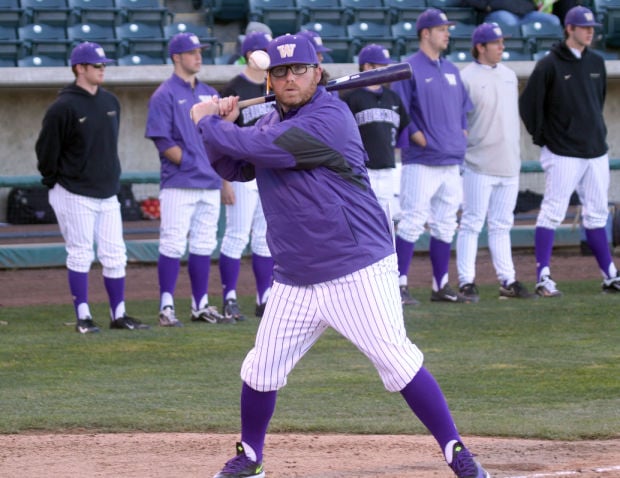
Implementing the Mental Game with University of Washington Hitting Coach Donegal Fergus

                                                         (Photo credit: www.tdn.com)

I met Donegal Fergus on a flight from Los Angeles to San Francisco during a fall recruiting trip. Fergie is a light in the room: energetic, bright and ready to go all day. We share a passion for teaching the mental game, breathing, stretching the mind...and hitting. Fergie is a giver who grasps the mental game and, most importantly, knows how to implement it into an aggressive hitting style. He was generous enough to share with us all. Soak it in.

Thanks, Fergie.


Q: How do you integrate the mental game into your offensive preparation in practice?

A: We talk mental game every day. Principles of our beliefs: growth, mindset, learning how to learn, curiosity and openness to new concepts. We start practice with group breathing exercises. Guided meditation. Individual breathing techniques are honed in BP. As our guys transition from cage to main diamond for their rounds on field, they first spend one minute on their own practicing "quick transition" breathing techniques before starting their BP rounds.

We also frequently use the classroom to discuss themes like confidence, failure, and commitment. My guys know they can always come and talk privately about anything and that happens regularly. We call it the psychiatrist's couch.

Q: What do the best hitters in your program do well mentally?

A: Our best guys move on the fastest from down moments. They get frustrated and upset like everyone but they hit reset much quicker than the rest.

Q: How do you coach the mental game differently now than you did five years ago?

A: I'm more open with my guys. I explain the "why" much more than ever. I used to tell them just trust me that it's right. "Shut up and do what I tell you," in a way. Now I encourage them to challenge me and ask questions if they don't understand or think they have a better way.

I tell them from the beginning that it is a collaboration. We're in this together. All in. No turning back. I trust them to listen and learn and push their own limits and they trust me that I have nothing but their best interests at heart. We talk about that openly. Allows me to try just about anything with them. It also allows for greater buy-in because it's all "theirs."

Thursday, March 5, 2015

Hitting Excellence: Winners and Learners

                                                              (Photo credit: Onlygators.com)

If you want to be a champion, you cannot lose.

Read that again. If you want to be a champion, you cannot lose.

There should be no such thing as "winners and losers." There should be "winners and learners."

Those who are defeated are quitters. Those who quit are defeated. Champions lose, learn, make quick adjustments and prepare again. This theory holds water not only in competition, but also in hitting.

So many hitters turn one at bat into four. One inopportune result, not necessarily a bad at bat, can lead to three more just the same. A bad game turns to four and there you have it...the dreaded slump.

Relentlessness and mental toughness are attitudes. Attitudes are chosen.

Feelings are not facts. They are not tangible, evident problems. If you are frustrated, that frustration is most likely born out of fear. Fear of the unknown, fear of failure, fear you did not prepare hard enough, etc. "Will I be as good as I hope to be? Will I have another good season? Maybe I should have taken more focused swings in the cage."

These are normal thoughts. Likely, they are common for many hitters. Average hitters.

Excellent hitters have a written or clear mental plan of how they want to prepare. They trust their preparation. They bust their tail so hard that they feel they have left others behind. Next, an excellent hitter has success and failure, just like the average hitter. But the excellent hitter has confidence in his preparation to go back to, like a fat storage in winter, that provides through tough times. Just a few ounces of extra confidence can spark a quality at bat to turn things around.

If confidence in preparation did not turn things around, an excellent hitter notes what he has been doing well, doing poorly, and how pitchers have been pitching him. He maintains perspective, an integral part of seeing in darkness. An excellent hitter ensures he is in control of himself; he breathes deeply and has aggressive and positive self-talk. He then makes sound adjustments and attacks the game with new information. He is a learner.


Sunday, January 18, 2015

Pre-At Bat Preparation

Credit: Newscom


When do your hitters begin to get ready for their at bat?

Most hitters begin preparing for their at bat in the on deck circle. For the first time, their eyes are on the pitcher, though there may not be much focus. So many hitters look in the stands for their Dad, see where their girlfriend is seated, or laugh at someone's toddler picking his nose. Where's their preparation? No wonder hitting is so hard!

While on-deck, some hitters begin to notice how hard the pitcher really is or isn't throwing, the shape of his breaking ball, or the movement of his fastball.

We tell our hitters that the at-bat is the test, and the pitcher will give us the answers, if only we will pay attention.

Here is how we approach pre-AB preparation in our program:

1.) We demand that our hitters get their helmet, batting gloves, pine tar and any other accessory they need to hit prepared when they are in the hole. When a batter steps into the box, our hitter in the hole is fully prepared to hit, and keenly watches the pitcher.

2.) We won't pretend that many student-athletes can focus with intensity for three hours, so we don't ask them to. Hitters have to be able to space out and lock back in. This is natural human behavior, and it's how our minds often best learn. However, we want to give our hitters the best chance to learn what the pitcher is going to challenge them with. All of our hitters are required to be on the dugout rail nearest home plate, and we don't allow pitchers near our area - they stay at the other end of the dugout while we are on offense.

3.) Every game, our lineup card has our lineup on the left, and uses the other team's lineup to write in a second lineup for our team. This second lineup is for our "Mental ABs." Every one of our non-starting players on the right is matched up with a starting player on the left. When the starter pushes his helmet down, pulls his batting gloves on tight and lines his bat with pine tar, our "Mental AB" hitter does the same.

While the starter is on-deck and hitting, our backup hitter visualizes his approach, takes dry swings and goes through his pre-, during and post-AB routines. The mind can not truly separate real experience from that which is imagined, and these hitters are gaining preparation and confidence that gives them a better shot at success when called upon.


Last year, we had a freshman catcher take advantage of his mental reps, and when our number one guy went down with a knee injury, the freshman stepped in, had 3 QABs his first game and rolled to an .830 OPS in 100 ABs.


Saturday, November 8, 2014

"When" Is Just As Important As "What"

Part of being a helpful hitting coach is empowering a hitter with mechanical awareness. However, the timing of the hitting "teach" is as imperative as the actual lesson itself.

Most collegiate hitters have some awareness of their swings, and can generalize what they think a good swing should look like. This knowledge, and a desire to create consistency, can cause hitters to analyze and make corrections to each swing. This is an average and unhealthy behavior.

Yes, the best hitters work on their swings relentlessly, but they are working on their energy, focus and concentration as much as they train their mechanics. A thousand swings working on your mechanics doesn't make you a better hitter, necessarily. Intent is king. Purpose is paramount.

Coincidentally, knowing when to coach a hitter with a particular mechanical teach is important. Video review can assist a hitter's awareness and drill work can give a hitter consistency. But when a coach or a teammate makes a mechanical comment to a hitter, are his words well thought out and planned?

Most hitters having success will be resistant to change at that time, and who can blame them? Hitting is challenging. Some elite hitters can make adjustments without sacrificing current success. But let's not think about statistical aberrations here. We're casting a large net.

A helpful hitting coach should evaluate the emotional stability, confidence and current success of a hitter. The goal isn't to give the hitter the answer, but to help him learn the answer.

There will be a time for every hitter on your team, when they crave that interaction, that assistance, that trained eye and communication. If you've been building them up with confidence, energy and passion, hitters will listen keenly to your recommendations.

Wednesday, April 30, 2014

Recruiting Hitters Begins With Recruiting Character

When we hit the trail to evaluate players there are numerous concerns we must consider. We want to find hitters who are athletic, talented, skilled, projectable, durable, consistent and represent the type of character we want to embody.

All of this must happen within budget, competing against numerous other schools that have interest in the same player.

Of course, there are ideological questions. Should we sign the player who is more talented defensively but has less power? What about the hitter who has yet to show the ability to hit breaking pitches? Does he have a vision problem, an approach problem or has he just never learned how to get aggressive timing to a breaking ball?

And I really like this catcher offensively, and he receives well, but his arm is average. Can he be a number one catcher?

When we recruit, we have to look at the big picture, working to improve upon weak areas and build a well-rounded club. To do this, we need well-rounded players. Of course, it is impossible to have every player with every attribute, and we put a premium on defense and pitching. Still, there is something more important to learn about recruits than if they can play great catch.

We know we must score to win, but it is our confidence in an ability to take talented and gifted hitters and develop their approach and skill set that allows us to have this defensive-minded approach.
To recruit this way, we must bring in coachable athletes with strong work ethics.

We whole-heartedly believe that recruiting talent is imperative, but there is a price that is paid for signing uncoachable talent. We want a team of self-less players.


While this may sound obvious, we work very hard to minimize the number of risky people in our program, and this gives us greater consistency at the plate.  

Wednesday, January 22, 2014

Hitting Off-speed Pitches

I always laugh when I hear a scouting report that says a hitter “can’t hit a good slider.” No kidding.  Most of the time, neither can Miguel Cabrera. What coaches likely mean to say is, “this kid has no clue how to look for an off-speed pitch, analyze what tunnel the ball has come out of, decipher if this pitch will be a good pitch to hit, and put an aggressive swing on it.”

To be a strong hitting team against strong pitching, our hitters must understand when, how and why to look for an off-speed pitch. Bat speed is a talent that can be maximized. Hitting a curve ball is a skill that can be mastered.

We have to practice, daily, hitting breaking balls on the field, in the cage and visualizing off-speed pitches when hitting off of a tee.  If we expect our hitters to improve a skill, we must work SMART. Give them the toolbox from which to draw the proper tool.

There are several misanalyses in coaching jargon. Let’s take a look at two of them.

OFF-SPEED COACHING MISANALYSIS #1: “He can't see spin.”

First, as coaches, we are responsible for knowing whether our players have good eyesight. Do they wear contacts? What type of vision do they have? Making assumptions often makes…well you know.

Secondly, most hitters can see the spin of the ball. They can describe what each pitch looks like. Developing this awareness starts with dialogue, with questions, and an open conversation of what the pitches looked like, and what they did. Having hitters stand in on bullpens is a terrific way to develop this dialogue and for them to practice rhythm and timing.

Make a game out of the bullpens by having hitters call out “1” or “2” for fastball or off-speed, or “strike” or “ball” as soon as they recognize tunnel and spin. Keep a chart. Measurement of a skill equals motivation to improve the skill.

OFF-SPEED COACHING MISANALYSIS #2: “He only wants to hit fastballs.”

Loosely paraphrasing John Wooden, “there are no bad students, only teachers who don't reach them.”

Every thought, every choice, every decision a human makes is either in pursuit of pleasure or in avoidance of pain. Many athletes spend more time avoiding pain than seeking pleasure. Hitters will avoid swinging at off-speed pitches early in counts because they do not know how or why to look for them, or how to stay in sequence while the ball decelerates towards the plate with downward movement. You have to TEACH them how to hit off-speed pitches.

Front toss is the simplest way to teach the timing of hitting a breaking ball or change-up. We teach our hitters to front toss to one another at two different speeds. When we are front tossing, we are hunting fastballs and adjusting to slower pitches that are elevated, or we are hunting slower pitches that are elevated and taking all fastballs.

We teach our hitters, when “aggressive to off-speed,” to slightly delay the timing of the load and the stride. Watch a big leaguer, and you’ll see how their timing on some off-speed pitches is impeccable, like they “were looking for it.” That’s because they were.

When you see a big leaguer with fastball timing, keeping his hands in a loaded position, he has retained separation between his load and his stride, creating a tension or resistance in his posterior core that creates stored energy.

When our hands or “load” float forward, we lose early-swing bat speed and can only pull the baseball with authority.


We want our hitters able to drive the off-speed pitch to the middle and slight-oppo side of the field.

Saturday, January 18, 2014

The Mental Game System: 4RIP3

Successful people have a system for everything. A system for where they leave their wallet and keys at home, a system for how they prepare meals in advance, a system for how they prepare for a workout, a system for how they wake up in the morning, a system for what they do before they go to bed, a system for how they return and organize e-mails and on and on…

Hitters need a system that helps them control their thoughts and attack the game with confidence and aggressiveness.

The system we use is renowned sports psychologist Brian Cain’s “4RIP3.” You can access the excellence that is Cain at www.briancain.com . I highly recommend buying ANY of his books.  These books are not baseball books, or even just books for athletes, these are books for life!

EACH of them is outstanding. Reading just one of his books is helpful. Reading several of his books, listening to his audio tapes, watching him interact with coaches and athletes, and committing to a lifestyle of excellence...will change your life forever!

The acronym 4RIP3 is comprised of 4 R’s, 1 I, and 3 P’s.

The R’s: Routine, Recognize, Release, Refocus.
The I: Imagery, also known as visualization.
The P’s: Present, Process, Positive.

If you stick with me on this blog, you will see the language of “Cain” is in everything we teach. If you don’t have a system for most details in your life, particularly how you prepare, how you compete or how you overcome adversity then this quote is for you: “It is the START that STOPS most people.” 


Sunday, January 5, 2014

Emotional Hitters vs. Thinkers

One of our freshmen, a hulking and strong young man, hit his first homerun with us a couple of weeks into our fall season. We encourage post-at bat communication to increase awareness, so I asked him what pitch he had hit. At first, he said he didn’t know. Then, realizing this may not have been the most complete answer to give his hitting coach just moments after hitting a home run, he shuffled his feet and said, “Uh, I think it was a two-seamer.”

Flash back a couple weeks previous to that at bat. The setting: a Greek-Italian restaurant, one of our favorites for taking recruits and their families on official visits. As I sat at a large table with another large bison-looking hitter, I listened to this junior college hitter pick apart, pitch-by-pitch, at bats he had in junior high...Junior High!  

When our freshman donkey tried to recall, thinking this was for me and not him, what he hit, he didn’t recall the correct pitch. He had hit an 0-2 hanging slider off of our knuckle-scraping closer. Its spin was unmistakable, and combined with the poor location, sped up his timing enough to get his barrel out in front, and he stayed through the pitch well, breaking posture to get his top hand through the zone and hit a pee-rod of a line drive over the left field wall. 

We’ve all coached players like the above junior college player. They remember pitches they took. They remember pitches teammates hit.

I do not pretend to hold a master’s degree in biology, psychology or any –ology for that matter. I do recognize however, that there is a distinct difference in the ways in which the brain of an “emotional hitter” and a “thinker hitter” organize and relocate at bats, pitches and their results.

Our best hitter in 2012 was a “thinker.” He was extremely prepared, extremely regimented, extremely disciplined, and made precise calculations in approach from pitch to pitch. He had an 1.123 OPS with 100 hits, 30 extra base hits, 68 R, 65 RBI and was a 1st team All-American.

Last year, we had a senior step into the lime-light when another infielder went down with an injury. Any post-at bat conversation with said senior could require taking a dose of Excedrin. He appeared to have no pre-determined plan besides attacking strikes. See ball, hit ball. That young man is a very smart young man, but his ability to recall his plan, what pitch he saw or hit, or even what inning we were in, was often missing. However, this young man surprised everyone to have a .970 OPS in almost 200 at bats and nearly hit .380 with 20 extra base hits. While he was an extremely intelligent student and a terrific young man, we found out which type of a hitter he was, an “emotional hitter” and we enabled him to practice THAT type of behavior in front toss, tee work, imagery and batting practice. When he learned to gain better control of his emotions, his career accelerated at a rapid rate.

Clearly, both types of hitters can have terrific success.

My experiences lead me to believe that asking “emotional hitters” to think can be wildly detrimental to their success. Conversely, when “thinkers” get emotional, their ability to process and make decisions and adjustments can be severely impaired. We’ve seen this scenario play out frequently. One of your best and smartest hitters is frustrated, disappointed, girlfriend dumped him, etc. He’s become emotional, and thus, he can’t think straight in the box. The ball looks small, his load/stride are late, his hands are slow, his feet are heavy and the game is getting faster and faster.


Ah…and we’ve come full circle back to the mental game. BOTH “thinkers” and “emotional” hitters can have increased level of success by relaxing their bodies and dominating a slow stomach breath. Note, the “Inverted U” of Success...our next subject.